How to Start Dropshipping in India with Zero Investment in 2026
Introduction: Why Dropshipping in India Is Exploding in 2026
If you had told someone five years ago that Indians would build profitable e-commerce businesses without owning a single product, most people would’ve laughed. Fast forward to 2026, and dropshipping is no longer a “foreign concept” or an internet gimmick—it’s a real, practical business model for everyday Indians. Students, freelancers, homemakers, and even full-time professionals are jumping into dropshipping because the entry barrier has never been lower.
Thank you for reading this post, don't forget to subscribe!India’s digital ecosystem has matured rapidly. Affordable internet, UPI payments, ONDC, and social commerce platforms have completely changed how people buy online. The biggest shift? You no longer need lakhs of rupees to start an online store. With the right strategy, free tools, and smart execution, you can genuinely start dropshipping in India with zero investment in 2026.
What makes this even more exciting is the growing trust in online shopping among Tier 2 and Tier 3 cities. People are no longer hesitant to buy from new brands if the presentation looks professional and the value feels right. That’s where dropshipping shines. You focus on marketing, branding, and customer experience, while suppliers handle inventory and shipping.
This guide isn’t theory. It’s a practical, step-by-step breakdown designed for beginners who want real results without financial risk. Whether your goal is side income or long-term freedom, dropshipping gives you a low-stress entry into e-commerce. So, if you’ve been waiting for the “right time,” 2026 is it—and this article will show you exactly how to start.
Understanding the Dropshipping Business Model in Simple Terms
At its core, dropshipping is beautifully simple. You sell products online without ever stocking them yourself. Think of it like being a middleman—but a smart one. Instead of buying products in bulk and praying they sell, you list products first, collect orders, and then purchase the item from a supplier only after a customer pays you.
Here’s how it works in real life. A customer visits your online store and places an order for ₹1,999. You receive the payment. Then, you forward the order details to your supplier, who ships the product directly to the customer. If the supplier charges you ₹1,200, the remaining ₹799 (minus platform fees) is your profit. No warehouse, no inventory risk, no upfront stock cost.
In India, this model is especially powerful because logistics networks have improved massively. Many Indian suppliers now offer fast shipping, branded packaging, and even cash-on-delivery support. International suppliers also ship to India more efficiently than ever before.
The real job of a dropshipper isn’t packing boxes—it’s understanding customers. You focus on product selection, pricing, content, and marketing. In many ways, dropshipping is more about psychology and branding than logistics. Once you understand this shift, the business becomes much easier to manage and scale.
Why Zero-Investment Dropshipping Is Possible in India Now
Zero investment doesn’t mean zero effort—it means zero financial risk. In 2026, India offers a unique combination of free digital tools, platforms, and distribution channels that make this possible.
First, e-commerce platforms now allow free trials or commission-based selling. Marketplaces like Meesho, Amazon (via seller programs), and even Instagram Shops let you list products without upfront fees. Second, marketing has shifted heavily toward organic content. Short-form videos, reels, and community-based selling mean you don’t need paid ads on day one.
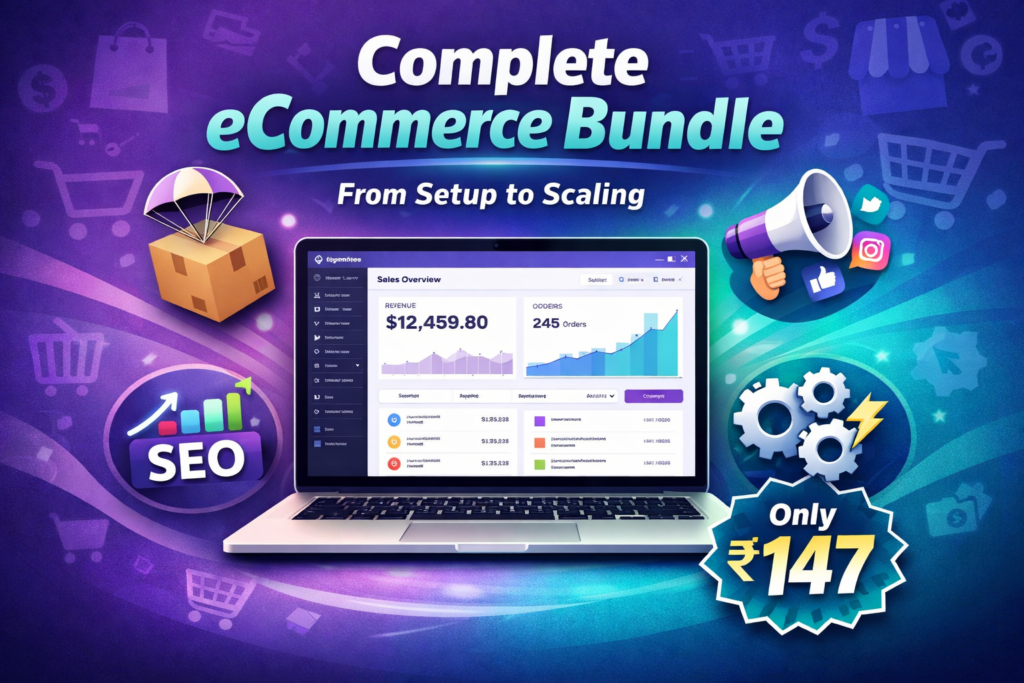
Another big reason is the rise of done-for-you resources. You can now access free product research tools, supplier directories, and even complete e-commerce learning bundles. For example, many beginners speed up their learning by using structured resources like this e-commerce bundle, which helps eliminate guesswork and beginner mistakes.
Payments are also easier than ever. With UPI, payment gateways now offer zero setup cost options. You only pay a small fee after you make a sale. That’s a game-changer for anyone starting with limited funds.
When you combine free platforms, organic traffic, and commission-based tools, dropshipping becomes one of the few businesses where execution matters far more than capital. That’s why 2026 is the perfect time to start.
Legal Side of Dropshipping in India (GST, PAN, Compliance)
One of the most confusing parts for beginners is legality—and honestly, it scares many people away unnecessarily. The truth is, dropshipping in India is legal, and compliance is simpler than most people think.
If you’re selling products within India, GST may be required depending on your turnover and supplier structure. Many Indian suppliers already include GST, which simplifies things. If you’re just testing the waters, you can start small and consult a CA once sales become consistent.
A PAN card is usually enough to begin on most platforms. Business registration like proprietorship can be done later when revenue stabilizes. The key is not to overcomplicate things at the start. Focus on learning and selling first, then formalize as you grow.
Understanding compliance early saves headaches later—but it shouldn’t stop you from starting. Dropshipping rewards action-takers, not overthinkers.
Choosing the Right Dropshipping Niche for the Indian Market
Niche selection can make or break your dropshipping journey. A niche is simply a focused category of products aimed at a specific audience. Instead of selling “everything,” successful dropshippers sell “something specific” to “someone specific.”
In India, evergreen niches like home improvement, fitness accessories, kitchen tools, and mobile accessories perform consistently well. Trending niches—like viral gadgets or seasonal products—can generate quick sales but require fast execution.
The smartest approach is combining demand with practicality. Ask yourself: Does this product solve a real problem? Is it affordable for Indian buyers? Can it be shipped easily without damage?
You don’t need paid tools to validate a niche. Use Amazon Best Sellers, Flipkart trending sections, Instagram reels, and even YouTube comments. If people are asking questions and showing interest, demand already exists.
The goal isn’t perfection—it’s momentum. Pick a niche, test it, learn from feedback, and refine as you go.